I'm posting some old letters to the editor. This is so I can remember what I wrote, and to keep myself honest. I'm posting them in the order I wrote them so this goes back a couple of years.
The short version is longer periods of drought, less rain and moisture coming in a large event instead of a series of moderate events.
That means flash flooding in steams which cut deeper and allow little or no water to soak into the banks of a stream.
That translates into a loss of riparian areas. Restoration of stream beds which have cut below the banks is an extremely costly process.
The Colorado has been named America's most endangered River.
"The Law is an Ass." said Mr. Bumble. The awful truth is- you leave the water in the stream and someone else snatches it. Which one of our run-off Mayorial candidates has the stones to fight Denver and Colorado Water Law?
As long as we are hamstrung by Colorado Water Law we cannot allow rain gardens and rain harvesting where there is a municipal water plant. Think how much water could be left in the headwaters of the Colorado if the Front Range required rain harvesting. Think how much we could leave in Castle Creek and Maroon if we lead the way.
I'm posting some old letters to the editor. This is so I can remember what I wrote, and to keep myself honest. I'm posting them in the order I wrote them so this goes back a couple of years.
The more things change…..
This is from the Fall of 2012:
Thanks to all of you who responded to my previous letter asking for more information on the Hydro Plant. I've gotten some excellent information from both sides of the issue (in private and in public). The Chamber presentation at the Limelight and the special issue of "Cross Currents" were particularly informative. What a great job of keeping the Electorate informed and I'm proud to be part of such a passionate and concerned community.
If I had the option to write an "advisory" on the ballot it would be this: Add two things to the Hydro plan. The first is add oversight by experts in stream bed restoration who focus on connected habitats. The second is get some large scale battery storage for Aspen (invite Donald Sadoway here to test drive his liquid metal batteries).
Here's why:The 800 lb. gorilla in the room is Water Right Law. Above all the other questions on this issue this one will have the most permanent and far reaching effect. Is my choice really picking which City gets to ruin Castle and Maroon creeks, Aspen or one on the Front Range? This needs a Water Lawyer (which I am not) and I haven't gotten a definitive answer. The worst case scenario is that the second the City ramps down the Hydro initiative some other Entity will snag those Rights and drain both Maroon and Castle down to dust. Anyone who thinks that is a specious argument hasn't seen Colorado Water Law at work.
There are plenty of other questions.
1. Is it an Environmental disaster? Yes. I do believe that the plant running at full power will kill the riparian zone of Maroon Creek - taking the flow down 7 months of the year to minimum for fish will kill it. I believe this because I've seen it happen in other small stream beds in the area and I've been talking to permaculture experts (proponents of Van Clothier and Bill Zeedyk) about what it would take to restore riparian zones around my own little gully on Missouri Heights. It's possible, maybe, but it ain't cheap.
2. Am I throwing away my vote on an "advisory" which has no political teeth? No, there are no magic ESP decoder rings handed out to Representatives when then enter office. If I don't let them know my opinion then it isn't a Republic. I don't believe this vote will change how the City proceeds with the Hydro Plant. I believe the City Council majority tends to vote with our Mayor and our Mayor is solidly for this advisory. Why then is the discussion so heated? The Hydro vote is basically one of Confidence in our Representatives. It will also be fodder for an ongoing law suit so there is more than just pride at stake. Regardless of how you feel about the Electorate being used as a pawn in litigation (I believe both sides are guilty of this) you can decide which side of the law suit you favor and vote that way.
3. Overspending? Yep, I'm shocked, my local government has overspent it's budget, shocked I tell you shocked. First. Time. Ever.
I'm convinced that even with the fiscal ballooning of the Bond that our financial outlook is better if we proceed. Hydro pays back longer and better than any other Green energy alternative currently available. I asked a local Solar installer and their estimate was $10 million and 30 acres will get you 4 megawatts. Solar does "burn out" over time. Hydro running full blast will get you 5 megawatts and those turbines last.
4.The motives of both proponents and opponents are rife with hidden agendas? I'm shocked I tell you shocked. First. Time. Ever. Throw facts my way, not aspersions; this isn't high school.
5.I'm convinced that multiple sources of non- coal, non-fossil fuel energy is good thing (belt and suspenders).
6.I am equally convinced that killing Maroon Creek isn't worth paying less for electricity.
7. Can we have it all? Can we keep the riparian zones in Castle and Maroon and get Hydro and keep the Water Rights? Possibly, but I don't believe the current monitoring system is sufficient and we will have to spend a lot more money to slow down the streams so that they meander. I say this because no-one has mentioned measuring soil moisture content on the banks of either creek. The measurements are for water flow, water temperature and aquatic organisms - not how the stream feeds the vegetation on it's banks and that is what determines the quality of the habitat.
8. Does the "slow start" protect the stream? I doubt it. It's counterintuitive but by lowering the water level when it's at it's highest you're starving the banks of the stream- and that's what a good riparian system needs- not too much not too little- flooding on the low lying areas on either side of the stream. Add to this that no-one has mentioned our changing weather patterns which will likely reduce the number of inches of moisture per year while increasing the number of flood events (like Hunter Creek in 2006) the streams will probably be cut deeper and "dewater" the vegetation on the banks even more. As we begin to depend on Alternative Energy sources which are less "reliable" we need to pay attention to ways of storing Energy for usage "on demand".
9. Which brings me full circle: Under Colorado Water Law is my choice really picking which City gets to ruin Castle and Maroon creeks? I hate this question. It's Sophie's Choice but you get to shoot both the kids, oh joy.
I want some good to come of this and there is only one action I can think of which is a positive action.
Please don't ignore the 800 lb gorilla in the room: use it or lose it draconian Water Law. As long as our Feudal system encourages Senior Rights holders to drain the river dry to guard their "share" then there can be no vote of Confidence in that system. I may still be confused about the Hydro debate but I am not confused about this. Please, write your State Representative and tell them we want riparian areas protected, we want stream flows defended, we want some of that 2.8 billion in lottery money to go for protecting the water as well as "parks, recreation, open space, conservation education and wildlife projects" because without the water there is no wildlife to protect, open space for recreation, or a park to conserve. You don't have to be a voter in Aspen to voice that opinion you just need to be a voter in Colorado. It's a Western Slope issue, We can, and should, stand together on this one.
I'm posting some old letters to the editor. This is so I can remember what I wrote, and to keep myself honest. I'm posting them in the order I wrote them so this goes back a couple of years.
The more things change…..
This is from the Fall of 2012:
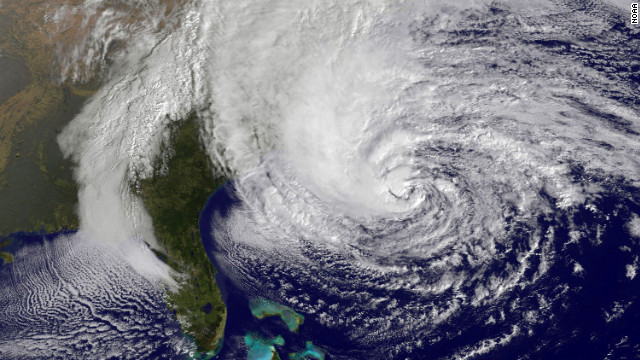
As I sit here and contemplate a beautiful blue sky and some fresh (much needed) snow on Ajax I'm led to wonder about our recent election and what the implications might be. Over numerous cups of coffee and discussions with my fellow citizens there was one recurring theme. That theme was a simple one "enough", enough taxes, enough spending, enough building. Now I admit most of the people I know here are not newcomers nor are they young. They've worked long and hard for their families and for the town and they want stability for themselves and their families. I wonder if Sandy signals our 1893 will this level of climate change effect the ski industry the way the silver devaluation effected the mining industry?
Since I'm someone who tends to think sideways I went back to money. We have a proposed City budget of $88,000,000 (last I heard at the City Council meeting- I challenge you to find that number on the Aspen/Pitkin web site) and our population (according to the last census) was just over 6000. That means $14,666 in spending for each resident of Aspen. Over half of that budget is earmarked for capital projects.
Then I go back to the highest per capita City Budget spending in the US. That's New York City. For that I go to http://www.ibo.nyc.ny.us and discover a proposed budget for 2010 of 47.1 billion. Divide that by the last census numbers for Manhattan of 8,244,910 and you get a per capita spending of $5712 and change (the projected 2013 NYC budget comes closer to $7200 per capita).
New York has public hospitals, public housing, a public city university (CUNY, free universal Pre-K in fact 25% of the proposed budget is for education), a guaranteed right to shelter, rent subsidies, guaranteed summer jobs for teens, senior centers/meals/subsidies, parks, police, fire department, libraries, public transport, their own EPA (25%) and a personal favorite- one fantastic Film Commission (within the 10% for housing and economic development).
So what is Aspen getting for 2x+ the price compared to New York? How do we compare in Social services? Why has the electorate been asked to endorse more money for the library? the schools? the hydro plant? I would *love* to see a side by side comparison of construction costs of Burlingame to any NYC Union built Project.
The big difference IMO is that the NYC money comes from property taxes and an individual income tax. Aspen gets it's millions from sales tax and the real estate transfer tax. So, NYC gets it's money from it's citizens and we get our money from our visitors and our second home owners. In the end I believe this leads to a deep disconnect. The majority of the money isn't coming directly from the residents so we're not as proactive in overseeing how it's spent. As the property tax issues begin to hit closer to home perhaps locals will begin to feel a little more proprietary and demand more social services for themselves. I believe this is the motivation behind all those expressions of "enough".
Leaping right into the deep end with Adam Smith's Theory of Moral Sentiments… and then plunging right into the mother lode "Wealth of Nations" ... followed by Benjamin Franklin's Principles of Trade "It is in vain imagination that we exist only for ourselves…. "
Which led me straight to Matt Ridley's TED talk "When Ideas Have Sex"
What a tempting thought, the Darwinian Free Market … turning Adam Smith's trickle down into a global bottoms up with the aid of the internet. It's still elitist- you just need a smart phone.
...but is prosperity Justice and is Justice something which humans need to survive? How enlightened is Self Interest? Can you legislate morality? Do we ever legislate anything other than morality? Does our moral compass change over time? The morality of 17th century Europe would have burned me as a witch. Does the moral compass change due to Culture? The morality of ISIL wouldn't be great for me either.
We're snapped back with reading #3 The Angostura Address by Simón Bolivar and the timeless "A corrupt people can indeed attain freedom but lose it at once." followed by Rousseau's "Freedom is a succulent food but hard to digest" How well Rousseau would have recognized the Arab Spring and how well Robespierre would have recognized ISIL. Bolivar sets his sights on "the practice of justice is the practice of freedom" and how exactly do we insure Justice? Is Bolivar's Hereditary Senate a college of Cardinals? Do we put Jesuits in charge? Is an educated bureaucrat the salvation of our souls? Pope Francis seems to be doing a better job than many of his predecessors. That's a whole different take on "laissez-faire" it's let the synod argue but make the debate transparent- publish the names and let them stand up in a strong wind.
Which leads us nicely into Madison and the Federalist Papers where Madison outlines how to keep Justice in the Republic by distributing power into the hands of the many. The more power is chopped up into small bits and in different hands the more those hands will have to cooperate to achieve a common goal. It's a nice turn on a core principle of monarchy- keep the Barons poor and occupied and you'll keep the power. It's great until those Barons cooperate and write up a Magna Carta.
Madison is a fascinating character. Jeff Rosen gave a great lecture on the Constitutional Convention at this year's Aspen Ideas:
Back to divide and conquer…a more modern riff on this is Elizabeth Pisani's Indonesia where local "democratic sultanates" keep their autonomy. They keep autonomy because, according to Pisani, they don't have constant oversight from "big government" in Jakarta. This also echoes back to Bolivar's caution about culture our virtues may be cross cultural but the way we get there certainly has a distinct flavor.
Can the altruism at the core of Eastern philosophy translate into localized democracy? Damn, that's about as Utopian as you can get in 2014.
What does Laissez-Faire have to do with Justice? Who's willing to run that experiment .. wait… maybe we are in the middle of that experiment right now.
What does Madison have to do with Richard II? Oh, so much, so very very much. For desert we have a treat.
This is definitely more fun than washing dishes.
The seminar is moderated by Todd Breyfogle, Alexis Diaz, and Stephen Holley.