Thursday, December 4, 2014

Parking under the Park, letter to the editor 2013

I'm posting some old letters to the editor. This is so I can remember what I wrote, and to keep myself honest.  I'm posting them in the order I wrote them so this goes back a couple of years.

The more things change….

This is from the Summer of 2013

What follows is an opinion.

Oh goodie we have another issue for people to act like one year olds spoon banging their bowls of pap. The parking garage under Wagner Park is sure to bring out the entire Aspen Circus. Goodie. Give me the bears.


The buses used to stop at the corner of Mill and Hyman (x from the Wheeler) Ruby Park is better than that- but it's still a less than pleasant atmosphere in prime real estate.  Bottom line the problem of easy and immediate access the the heart of Aspen *and* keeping a restful quiet resort atmosphere is a difficult one. Ruby Park has not solved that problem. The Rio Grande city parking has not solved that problem. There may be an opportunity to correct that in the current process of redesigning and re- engineering the Rio Grande lot.

1. Digging in Aspen is always a risky proposition. Who knows, you might actually find hot water under Wagner. More likely you'll find a great archeological dig from the remains of the Clarendon Hotel or just a bunch of mine tunnels making an underground structure an engineering nightmare. You can ask the Melvilles how much trouble they had with their underground parking dig.

2. Parking Garages do not have to be NYC Port Authority concrete hell holes.


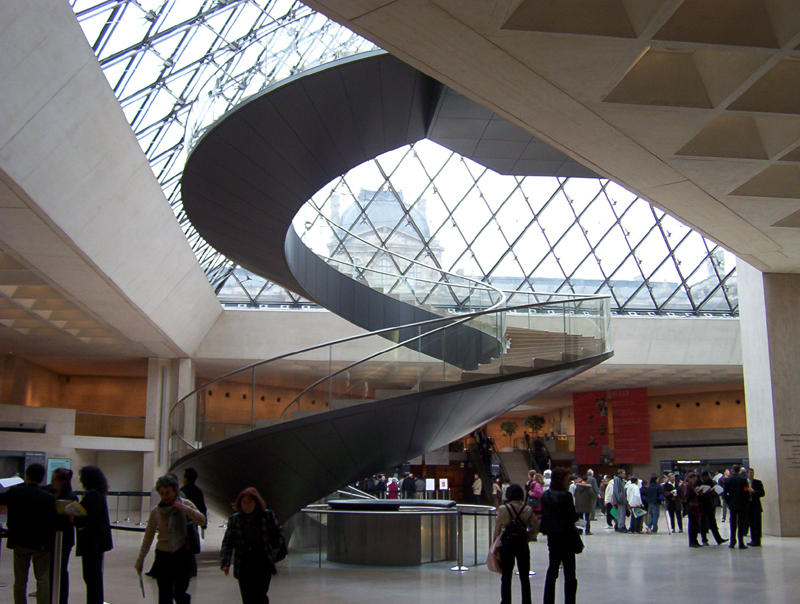
You can make a parking garage which is a pleasant experience *and* a retailers paradise. Other cities have done this with foresight and a lot of cash- but it's paid for itself in very short order. I will keep pointing to the huge success of underground parking at the Louvre which made museum entrance fees the single largest slice of the French GNP. It wasn't the pyramid which did that it was the combination of access, parking and splitting the Louvre ticket into 3 tickets (bloody brilliant).


3. Applying the theory of "service at the point of need" the only way to make Ruby Park better  is to make it a Park and reroute the buses to the Rio Grande lot. Skier buses could still stop directly at the Gondola to take skiers to the other mountains.  Yes, you would have to make a pull out for the buses but there would be fewer skiers crossing the road and it's possible the traffic flow on Durant would ease.

4. What determines how many cars use a parking structure is the vehicular entrance.  Spiraling around Monarch and Durant to an underground entrance at Wagner will not improve the traffic on Durant or in the core. The only way to do this and use Wagner would be to dig an entrance from Main street. I will win the lottery before that happens…. and to do that I have to buy a ticket.

5. What determines how people experience a parking structure is the pedestrian exit. I would *love* an exit from a parking structure right onto the mall (see above lottery quote) failing that we can make the exit from the Rio Grande so much better than it is. Just getting to the other side of Main would be a huge improvement. Retail and informational opportunities  as great or greater than those at an airport should be included.

6. Everybody thinks I'm joking when I mention underground bicycle parking- have you looked at the mall lately? It's a forest of bike racks. (granted, these may help the bears access the crab apples - or not) The Japanese robotic underground bike parking structures are *cool*.


The experience of seeing Aspen for the first time can be crafted so that those visitors who arrive feel they've reached a place where the noise and bustle of a large city has slid away. Notice I didn't say where that all the modern conveniences were gone- just the stress. That's our "product" natural beauty and a kick ass service community. The benefit of this is that we, who live here, get to enjoy that "product" year round- so it's a win win.

I sincerely believe the way to achieve this is to explore future thinking solutions like using power from hybrid/electric cars in parking structures to power the Aspen grid and reach that 100% renewable goal, like underground bicycle parking (seriously- check it out on youtube it's a kick), investigate the train again- but this time include a carrier car for trucks and vans so that deliveries can come off of 82 and onto the rails until they reach Aspen- and please make a hook up to the Ski train from Denver- if that could get skiers all the way to Aspen- Oh my.


Crazy optimistic out of the box thinking? Isn't that what we're good at here in Aspen? 

The Cost of Education in reply to Melanie Sturm, letter to the editor, 2013

I'm posting some old letters to the editor. This is so I can remember what I wrote, and to keep myself honest.  I'm posting them in the order I wrote them so this goes back a couple of years.

The more things change….

This is from the Summer of 2013 and a response to an Aspen Times Editorial from Melanie Sturm

When I think of higher education in relation to expense my question is "Who pays the most to study in a US University?" The answer has to be the International Student. I'm not just talking money (there's plenty of that) I'm talking the cost of traveling half way around the world, leaving your family, adjusting to a completely different Culture.

Why would anyone take that enormous risk without a promise of great reward?

To help me find the answer I went to the Institute of International Education which has some fascinating reports on line. What should get everyone's attention is $22+ billion dollars contributed to the US economy from foreign students. Another item of interest is that majority of our foreign students were already employed in their home country before they applied to a US University.

So, why do they come?

The report "An analysis of international students' motivations for studying in the United States." offers some insights. Yes, we rank high because of Scholarship/Grant help. But we're the hardest country (according to the survey) in which to get a Visa (Europe is much easier) and have a low rating in the "Do you feel safe?" category and we don't even get a mention for Culture and Arts. Most of our foreign students come here for Tech and Business degrees.

What's the attraction? More to the point- where do we rank higher than the EU/UK?

Although foreign students feel less safe here than in Europe they feel we are more "welcoming". They see more diversity, better facilities, and a much better chance of getting a job back home with a US degree than an EU degree. We rank high in prestige , support and quality and low on tradition. That means we're flexible- at least compared to the student's home Country.

We are still seen as a land of opportunity by the rest of the World. Now, how do we continue to offer that opportunity to our Citizens?

The suggestions of more vocational opportunities, extended time frames and digital aides (like Khan Academy) are certainly welcome. However, the fewer students the higher the tuition for those who remain.

Our current system rewards the University which is affiliated with 'for profit' and 'non- profit' partners. Their Academic status qualifies them for grants. Their non-profit partners provide a place for research to continue post-grad. The research facilities feed results to the 'for profit' company. The 'for profit' Company then donates a tax deductible scholarship to the University. When this model is really successful the 'for profit' company is a direct spin off from the non-profit (RMI and Fiber Forge*) That is how our Tech/Business schools survive and continue to grow. Even our testing programs in K-12 are geared to fit into this Tech/Business model. They don't do it well, but that's the intent.

What that leaves out of the mix is everything else, the Trades, Humanities and the Arts.

Let's play to our strengths. We're told we're more innovative, flexible and open than the rest of the world and this is the golden triangle which supports our reputation. Surely we can devise a system which is also innovative, flexible and open. We've never bought ourselves out of trouble, we need to think our way out

*note from 2014: Sadly this did not end well as I found out from a former employee when we had a long chat in the Mill Street Mall. 

Hydro Plant and Climate Change, letter to the editor, 2013

I'm posting some old letters to the editor. This is so I can remember what I wrote, and to keep myself honest.  I'm posting them in the order I wrote them so this goes back a couple of years.

The more things change….

This is from the Spring of 2013

For everyone interested in the hydro plant please read the latest report from NASA "New study projects warming-driven changes in global rainfall". 


The short version is longer periods of drought, less rain and moisture coming in a large event instead of a series of moderate events.

That means flash flooding in steams which cut deeper and allow little or no  water to soak into the banks of a stream.


That translates into a loss of riparian areas. Restoration of stream beds which have cut below the banks is an extremely costly process.

The Colorado has been named America's most endangered River. 

"The Law is an Ass." said Mr. Bumble. The awful truth is- you leave the water in the stream and someone else snatches it. Which one of our run-off Mayorial candidates has the stones to fight Denver and Colorado Water Law?

As long as we are hamstrung by Colorado Water Law we cannot allow rain gardens and rain harvesting where there is a municipal water plant. Think how much water could be left in the headwaters of the Colorado if the Front Range required rain harvesting. Think how much we could leave in Castle Creek and Maroon if we lead the way.


Hydro Plant, Letter to the Editor 2012

I'm posting some old letters to the editor. This is so I can remember what I wrote, and to keep myself honest.  I'm posting them in the order I wrote them so this goes back a couple of years.

The more things change…..

This is from the Fall of 2012:


Thanks to all of you who responded to my previous letter asking for more information on the Hydro Plant. I've gotten some excellent information from both sides of the issue (in private and in public). The Chamber presentation at the Limelight and the special issue of "Cross Currents" were particularly informative. What a great job of keeping the Electorate informed and I'm proud to be part of such a passionate and concerned community.

If I had the option to write an "advisory" on the ballot it would be this:  Add two things to the Hydro plan. The first is add oversight by experts in stream bed restoration who focus on connected habitats. The second is get some large scale battery storage for Aspen (invite Donald Sadoway here to test drive his liquid metal batteries).

Here's why:The 800 lb. gorilla in the room is Water Right Law. Above all the other questions on this issue this one will have the most permanent and far reaching effect. Is my choice really picking which City gets to ruin Castle and Maroon creeks, Aspen or one on the Front Range?  This needs a Water Lawyer (which I am not) and I haven't gotten a definitive answer. The worst case scenario is that the second the City ramps down the Hydro initiative some other Entity will snag those Rights and drain both Maroon and Castle down to dust. Anyone who thinks that is a specious argument hasn't seen Colorado Water Law at work.

There are plenty of other questions.

1. Is it an Environmental disaster? Yes.  I do believe that the plant running at full power will kill the riparian zone of Maroon Creek - taking the flow down 7 months of the year  to minimum for fish will kill it. I believe this because I've seen it happen in other small stream beds in the area and I've been talking to permaculture experts (proponents of Van Clothier and Bill Zeedyk) about what it would take to restore riparian zones around my own little gully on Missouri Heights. It's possible, maybe,  but it ain't cheap.

2. Am I throwing away my vote on an "advisory" which has no political teeth? No, there are no magic ESP decoder rings handed out to Representatives when then enter office. If I don't let them know my opinion then it isn't a Republic.  I don't believe this vote will change how the City proceeds with the Hydro Plant. I believe the City Council majority tends to vote with our Mayor and our Mayor is solidly for this advisory. Why then is the discussion so heated? The Hydro vote is basically one of Confidence in our Representatives.  It will also be fodder for an ongoing law suit so there is more than just  pride at stake.  Regardless of how you feel about the Electorate being used as a pawn in litigation (I believe both sides are guilty of this)  you can decide which side of the law suit you favor and vote that way.

3. Overspending? Yep, I'm shocked, my local government has overspent it's budget, shocked I tell you shocked. First. Time. Ever.


 I'm convinced that even with the fiscal ballooning of the Bond that our financial outlook is better if we proceed.  Hydro pays back longer and better than any other Green energy alternative currently available.  I asked a local Solar installer and their estimate was  $10 million and 30 acres will get you 4 megawatts. Solar does "burn out" over time. Hydro running full blast will get you 5 megawatts and those turbines last.

4.The motives of both proponents and opponents are rife with hidden agendas? I'm shocked I tell you shocked. First. Time. Ever. Throw facts my way, not aspersions; this isn't high school.

5.I'm convinced that multiple sources of non- coal, non-fossil fuel energy is good thing (belt and suspenders).

6.I am equally convinced that killing Maroon Creek isn't worth paying less for electricity.

7. Can we have it all? Can we keep the riparian zones in Castle and Maroon and get Hydro and keep the Water Rights? Possibly, but I don't believe the current monitoring system is sufficient and we will have to  spend a lot more money to slow down the streams so that they meander. I say this because no-one has mentioned measuring soil moisture content on the banks of either creek. The measurements are for water flow, water temperature and aquatic organisms - not how the stream feeds the vegetation on it's banks and that is what determines the quality of the habitat.

8. Does the "slow start" protect the stream?  I doubt it. It's counterintuitive but by lowering the water level when it's at it's highest you're starving the banks of the stream- and that's what a good riparian system needs- not too much not too little- flooding on the low lying areas on either side of the stream. Add to this that no-one has mentioned our changing weather patterns which will likely reduce the number of inches of moisture per year while increasing the number of flood events (like Hunter Creek in 2006) the streams will probably be cut deeper and "dewater"  the vegetation on the banks even more. As we begin to depend on Alternative Energy sources which are less "reliable" we need to pay attention to ways of storing Energy for usage "on demand".


9. Which brings me full circle: Under Colorado Water Law is my choice really picking which City gets to ruin Castle and Maroon creeks? I hate this question. It's Sophie's Choice but you get to shoot both the kids, oh joy.

I want some good to come of this and there is only one action I can think of which is a positive action.
Please don't ignore the 800 lb gorilla in the room: use it or lose it draconian Water Law. As long as our Feudal system encourages Senior Rights holders to drain the river dry to guard their "share" then there can be no vote of Confidence in that system. I may still be confused about the Hydro debate but I am not confused about this. Please, write your State Representative and tell them we want riparian areas protected, we want stream flows defended, we want some of that 2.8 billion in lottery money to go for protecting the water as well as "parks, recreation, open space, conservation education and wildlife projects" because without the water there is no wildlife to protect, open space for recreation, or a park to conserve. You don't have to be a voter in Aspen to voice that opinion you just need to be a voter in Colorado. It's a Western Slope issue, We can, and should, stand together on this one.

Aspen Budgeting, Follow the Money, Letter to the editor 2012

I'm posting some old letters to the editor. This is so I can remember what I wrote, and to keep myself honest.  I'm posting them in the order I wrote them so this goes back a couple of years.

The more things change…..

This is from the Fall of 2012:

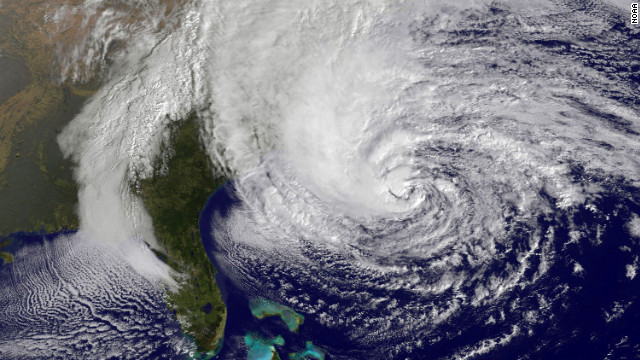
As I sit here and contemplate a beautiful blue sky and some fresh (much needed) snow on Ajax I'm led to wonder about our recent election and what the implications might be. Over numerous cups of coffee and discussions with my fellow citizens there was one recurring theme. That theme was a simple one "enough", enough taxes, enough spending, enough building. Now I admit most of the people I know here are not newcomers nor are they young. They've worked long and hard for their families and for the town  and they want stability for themselves and their families. I wonder if Sandy signals our 1893 will this level of climate change effect the ski industry the way the silver devaluation effected the mining industry?


Since I'm someone who tends to think sideways I went back to money. We have a proposed City budget of $88,000,000 (last I heard at the City Council meeting- I challenge you to find that number on the Aspen/Pitkin web site) and our population (according to the last census) was just over 6000. That means $14,666 in spending for each resident of Aspen. Over half of that budget is earmarked for capital projects.

Then I go back to the highest per capita City Budget spending in the US. That's New York City. For that I go to http://www.ibo.nyc.ny.us and discover a proposed budget for 2010 of 47.1 billion. Divide that by the last census numbers for Manhattan of 8,244,910 and you get a per capita spending of  $5712 and change (the projected 2013 NYC budget comes closer to $7200 per capita).

New York has public hospitals, public housing, a  public city university (CUNY, free universal Pre-K  in fact 25% of the proposed budget is for education), a guaranteed right to shelter, rent subsidies, guaranteed summer jobs for teens, senior centers/meals/subsidies, parks, police, fire department, libraries, public transport, their own EPA (25%) and a personal favorite- one fantastic Film Commission (within the 10%  for housing and economic development).

So what is Aspen getting for 2x+ the price compared to New York?  How do we compare in Social services? Why has the electorate been asked to endorse more money for the library? the schools? the hydro plant? I would *love* to see a side by side comparison of construction costs of Burlingame to any NYC Union built Project.

The big difference IMO is that the NYC money comes from property taxes and an individual income tax. Aspen gets it's millions from sales tax and the real estate transfer tax. So, NYC gets it's money from it's citizens and we get our money from our visitors and our second home owners. In the end I believe this leads to a deep disconnect. The majority of the money isn't coming directly from the residents so we're not as proactive in overseeing how it's spent.  As the property tax issues begin to hit closer to home perhaps locals will begin to feel a little more proprietary and demand more social services for themselves. I believe this is the motivation behind all those expressions of "enough".